What Wind Speed Can a Shade Sail Withstand?
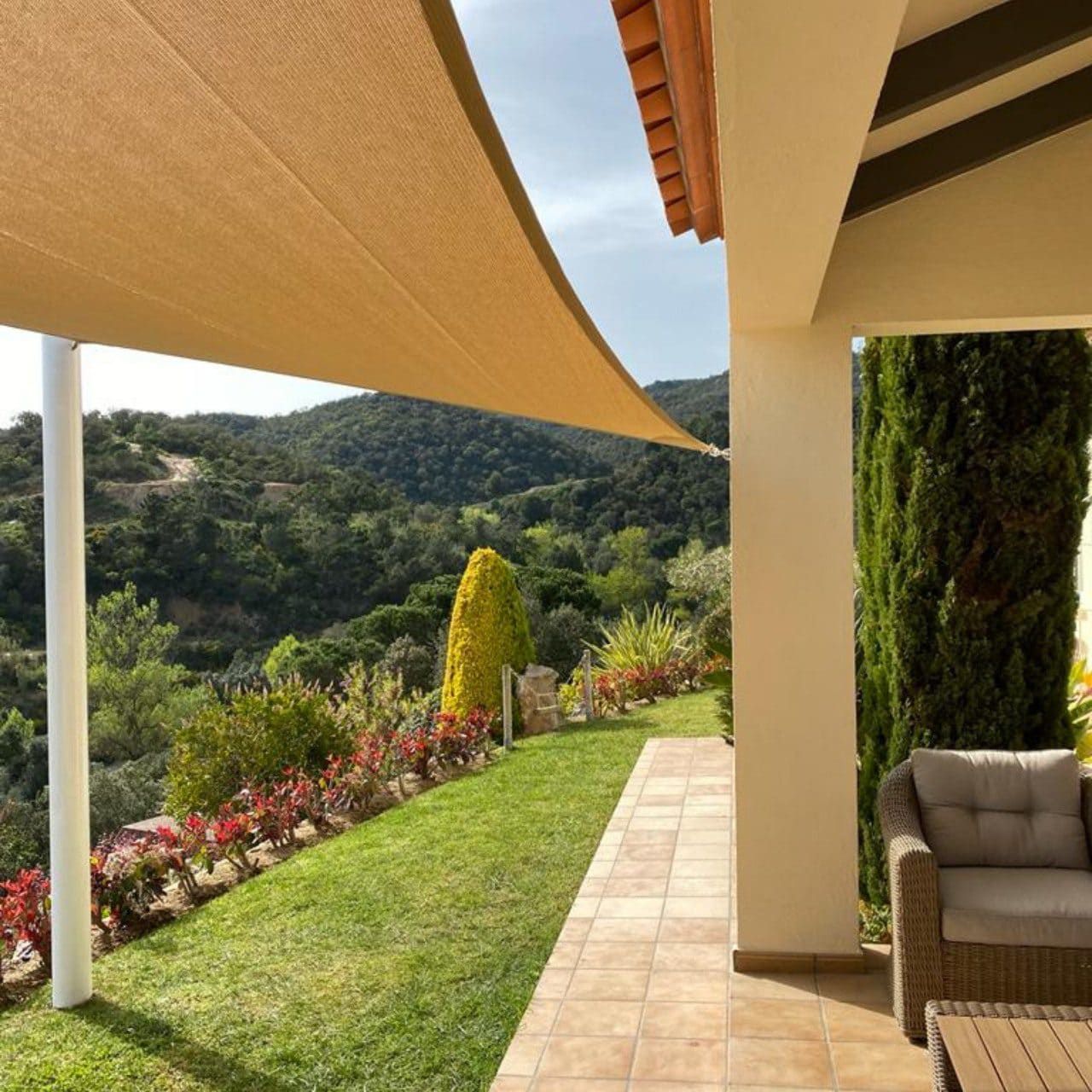
A well-designed, professionally installed shade sail can withstand wind speeds of up to 100 km/h. However, the sail itself is not the weak point. What really matters are the wall anchors or the masts, with foundations designed for each specific location.
What does wind resistance depend on?
- Anchor points. A wall, beam or mast has to carry the load the sail transfers when the wind blows. That is why we survey every project on site.
- Masts and foundations. When there is no structure to anchor to, posts and foundations are sized for each location.
- Tension. A properly tensioned sail does not flap; a loose sail suffers far more in gusts.
- The shape of the sail. Curved (catenary) edges spread the load and keep the fabric taut. Read more in why shade sails have curved edges.
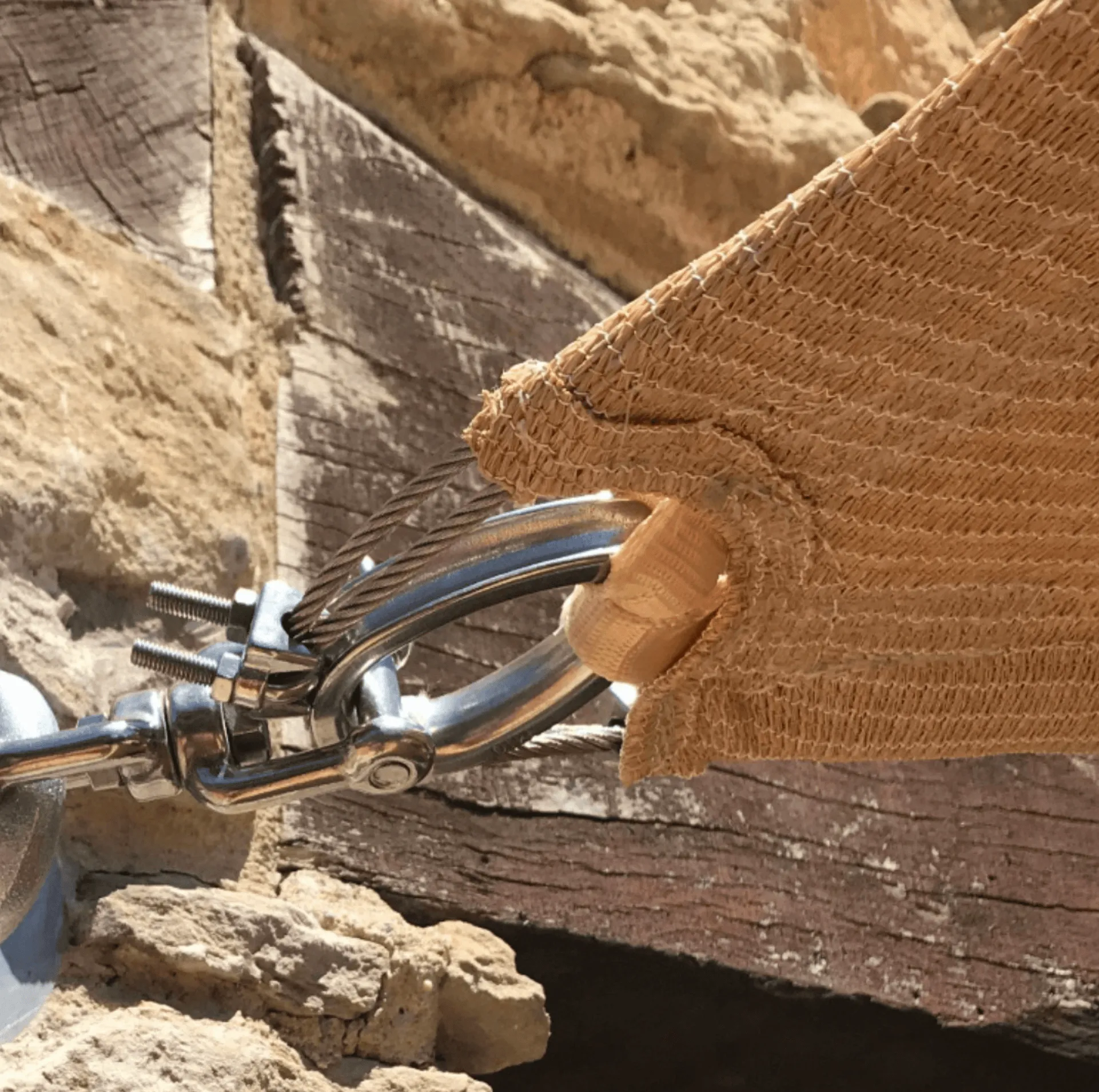
- Hardware. Quality stainless steel turnbuckles, shackles and cables.
What about the fabric?
The fabrics we use are breathable: they let some air through, which reduces the wind load compared with a closed canvas. In exposed locations, fabric and design are chosen with the wind in mind.
When should you take your shade sail down?
Even when a sail is built for strong winds, we recommend taking it down before storms or extreme wind warnings and, where possible, over the winter. It will last longer. See how to take down and reinstall your shade sail.
Live in a windy area?
Terraces, rooftops and coastal homes need a specific assessment. Read our guide to shade sails in windy areas, or ask us for a free assessment.