
Terraces · Rooftops · Coast
Shade sails for windy areas
A properly designed and installed shade sail can withstand winds of up to 100 km/h. Here is why, and how we achieve it on terraces, rooftops and homes by the sea.
- 4.9 · 19 Google reviews
- 20 years of experience
- Technical projects signed by architects

Up to 100 km/h
A properly installed shade sail can withstand winds of up to 100 km/h.
Calculated anchors
We assess every wall, beam or post and its foundation before installing.
Breathable fabric
Lets some air through, reducing the wind load compared with a closed canvas.
Professional tensioning
A properly tensioned sail does not flap, so it suffers far less in gusts.
Signed by architects
Technical projects with a quality seal and an architect’s signature.
Stainless hardware
Stainless steel turnbuckles, cables and shackles, built for coastal conditions.
Can a shade sail handle the wind?
Yes. A properly designed and installed shade sail can withstand winds of up to 100 km/h. The key is knowing where the weak point is: not the sail, but the wall anchors or the posts and their foundations. That is why, in windy areas, the site assessment matters as much as the fabric itself. We explain it in detail in what wind speed a shade sail can withstand.
What makes a shade sail wind resistant
- Calculated anchors and foundations. Every wall, beam or post has to carry the load the sail transfers in gusts. We assess this on site before proposing a design.
- Fabric that lets air through. Breathable fabrics reduce the wind load compared with a closed canvas.
- Curved edges and proper tension. The catenary shape spreads the load and keeps the sail taut. A loose sail flaps; a well-tensioned one does not. See why shade sails have curved edges.
- Pitch. With anchor points at different heights, the sail not only resists better but also sheds rainwater.
- Stainless steel hardware. Turnbuckles, cables and shackles made for the outdoors and the sea air.
Windy terraces and rooftops
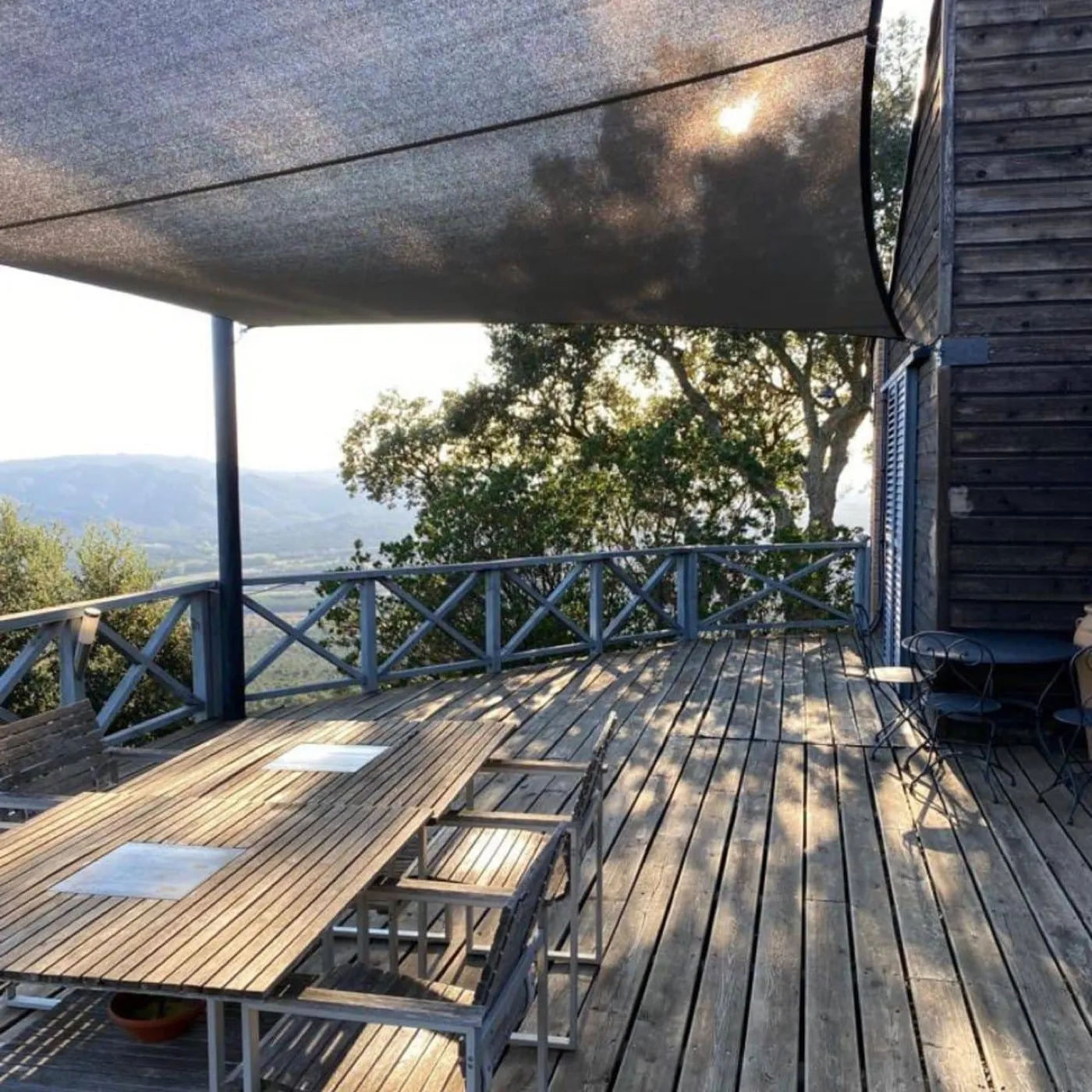
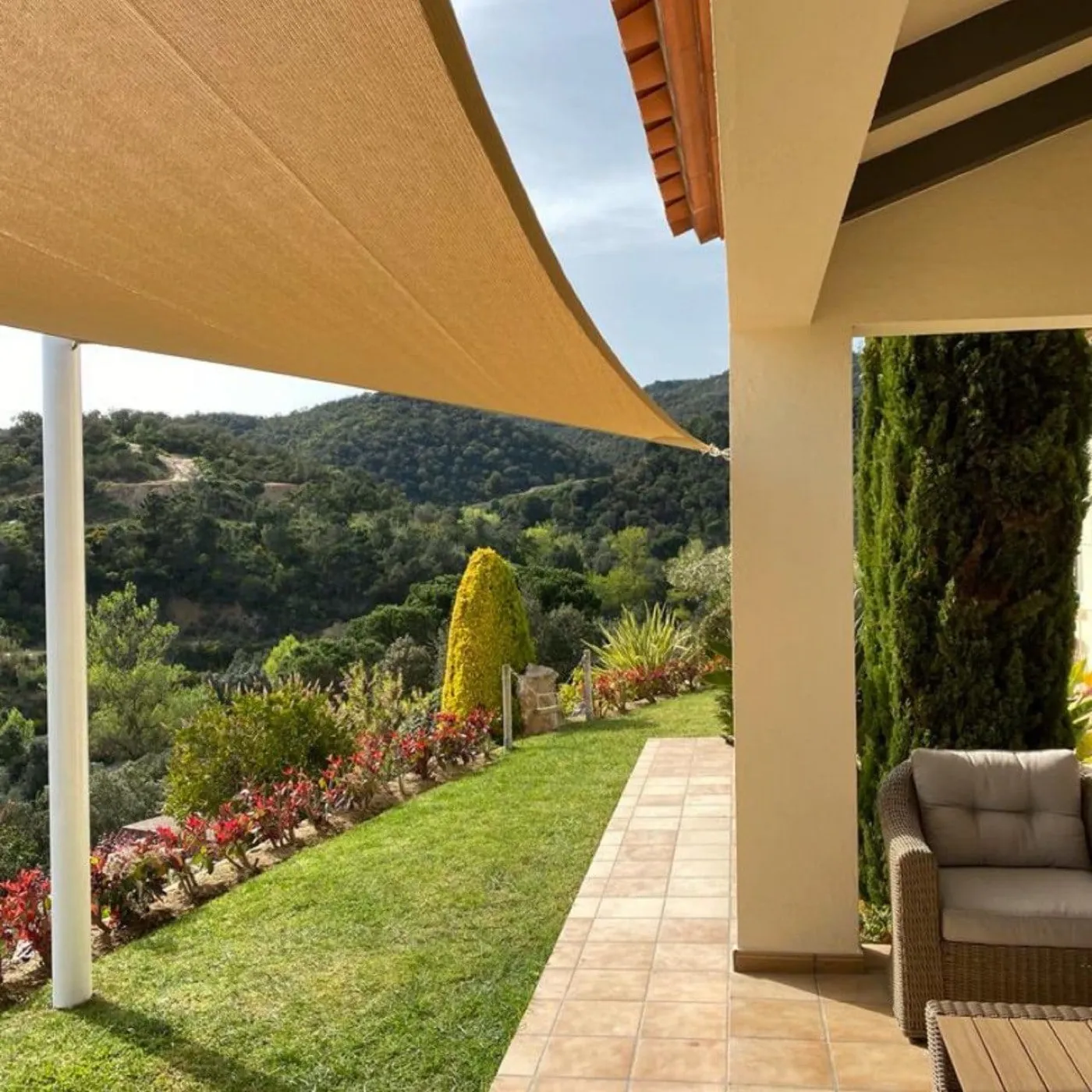
Rooftops, raised terraces and seafront homes are the most demanding cases. Before installing, we assess the orientation, the exposure to the prevailing wind and the structure available for anchoring. If there is nothing suitable, we propose posts with their own foundations. Read more in our guide to shade sails in windy areas.
Experience on the coast
We work from Palamós, on the Costa Brava. One of our projects is the installation of several shade sails at Port Marina Palamós, in the marina, creating new shaded areas in a location exposed to wind and sea air.
Looking after your sail in windy seasons
Even when a sail is built for strong winds, we recommend taking it down before storms and, where possible, over the winter. It is easy to reinstall in spring: see how to take down and reinstall your shade sail.




Coastal installations on video
Project: Port Marina Palamós
Port Marina Palamós: installation
Don’t worry about the weather
New project: terrace structure
How we work
From idea to shade
- 01
Consultation & site visit
Tell us what you want to cover. We study the sun’s path, the anchor points and how the space is used.
- 02
Technical design
We propose shape, fabric and colour. Technical projects are signed by architects.
- 03
Handmade
We make your sail to measure, with stainless steel hardware and turnbuckles.
- 04
Installation & maintenance
Our team or a certified partner installs it. We also offer annual maintenance.
Frequently asked questions
How much wind can a shade sail withstand?
A properly designed and installed shade sail can withstand winds of up to 100 km/h. The sail is not the weak point: what matters are the anchor points and the foundations of the posts.
Can I put a shade sail on a windy rooftop?
Yes, as long as the anchor points allow it. We assess the rooftop structure and, if needed, propose posts with their own foundations.
What if there is no wall to anchor to?
We install posts with foundations sized for each location, so they can carry the tension of the sail in the wind.
Should I take my shade sail down in winter?
We recommend taking it down before storms or extreme wind warnings and, where possible, over the winter to extend its life. It is easy to reinstall in spring.
Which fabric is best for windy areas?
A breathable fabric such as Gale Pacific COM95, which lets some air through. A closed canvas takes a much higher wind load.
Keep reading
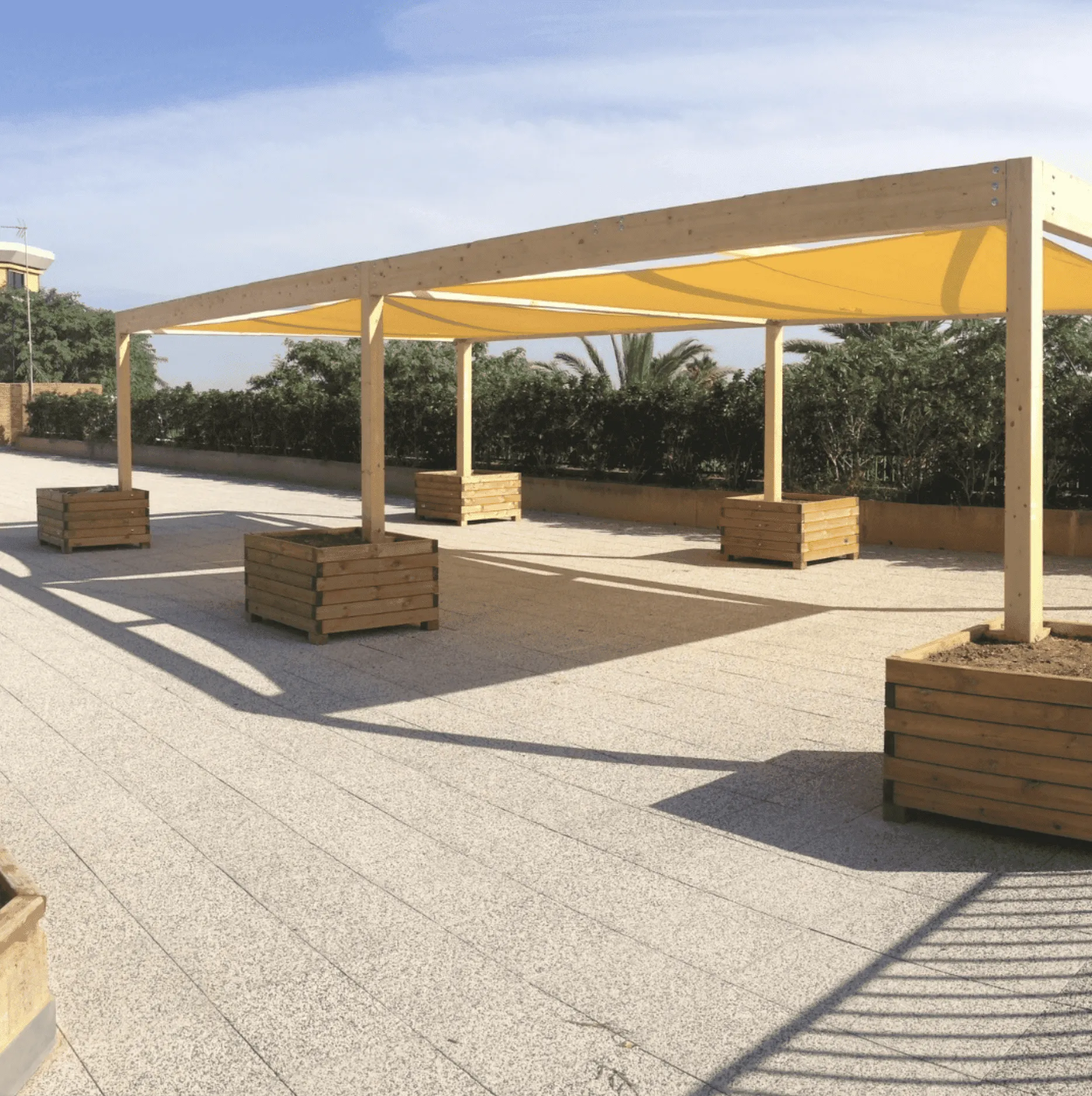 Shade Sails in Windy Areas: What You Need to KnowCan a shade sail handle high winds? Fabric, hardware, tension and installation tips for windy terraces and rooftops in Spain.Read article
 What Wind Speed Can a Shade Sail Withstand?A properly installed shade sail can withstand winds of up to 100 km/h. Here is why the anchor points matter most, and when to take your sail down.Read article
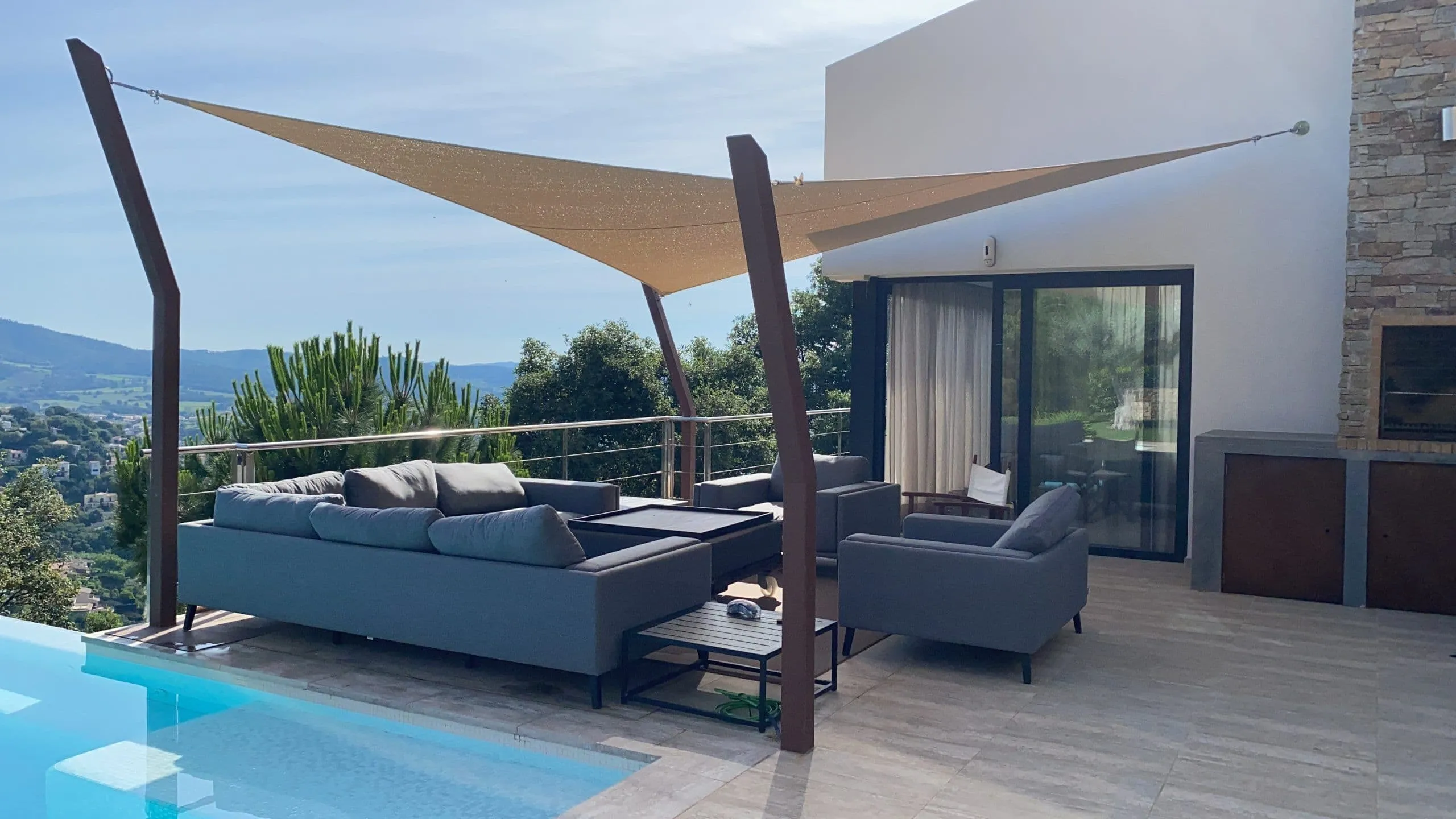 Why Do Shade Sails Have Curved Edges?The curved (catenary) edges of a shade sail are what keep it taut, wrinkle-free and wind resistant. Here is why they matter.Read article
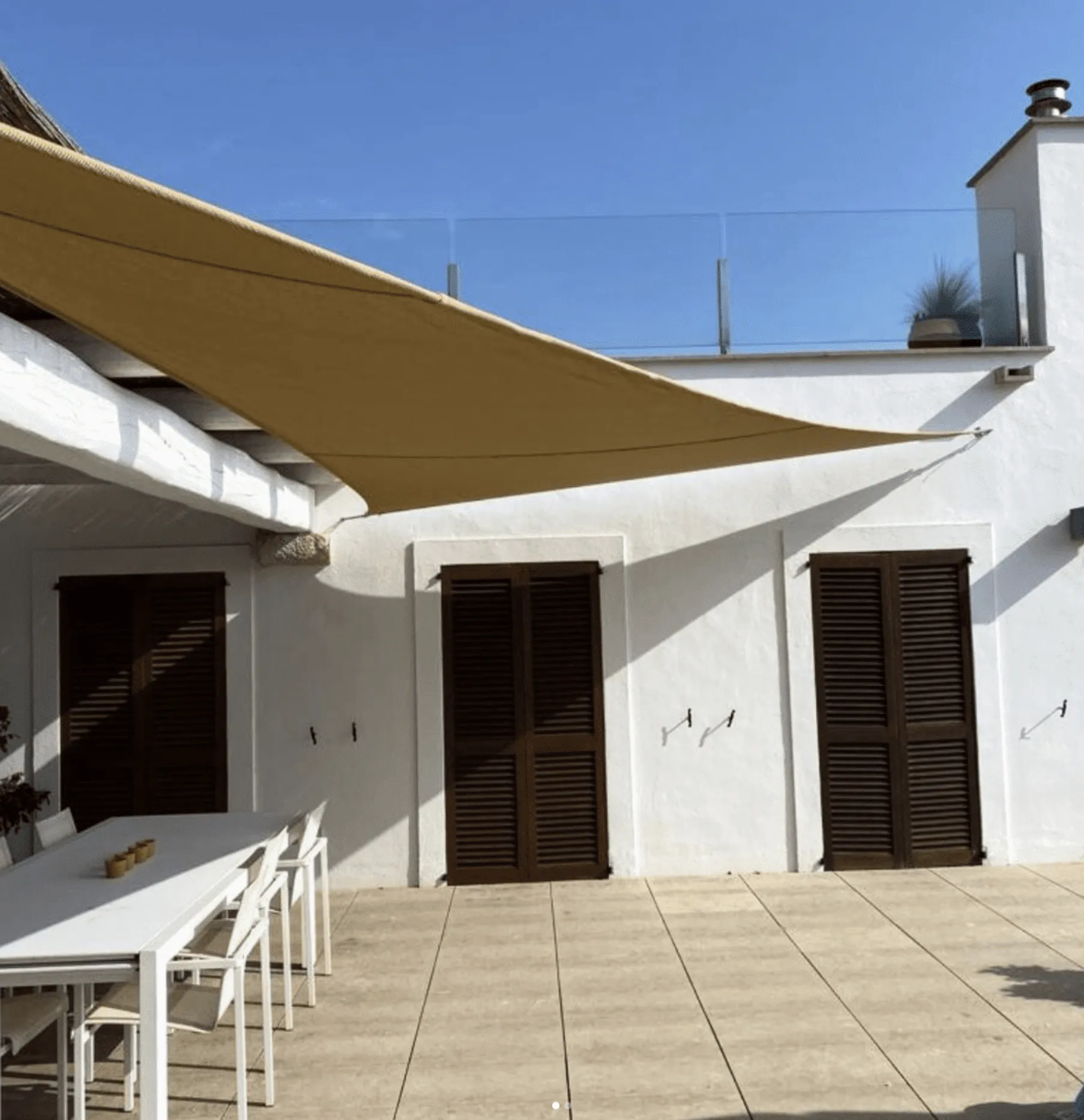 Can You Take Down and Reinstall a Shade Sail?Yes: custom shade sails can be removed for winter and reinstalled in spring. Learn how to do it safely and how to store the fabric.Read article
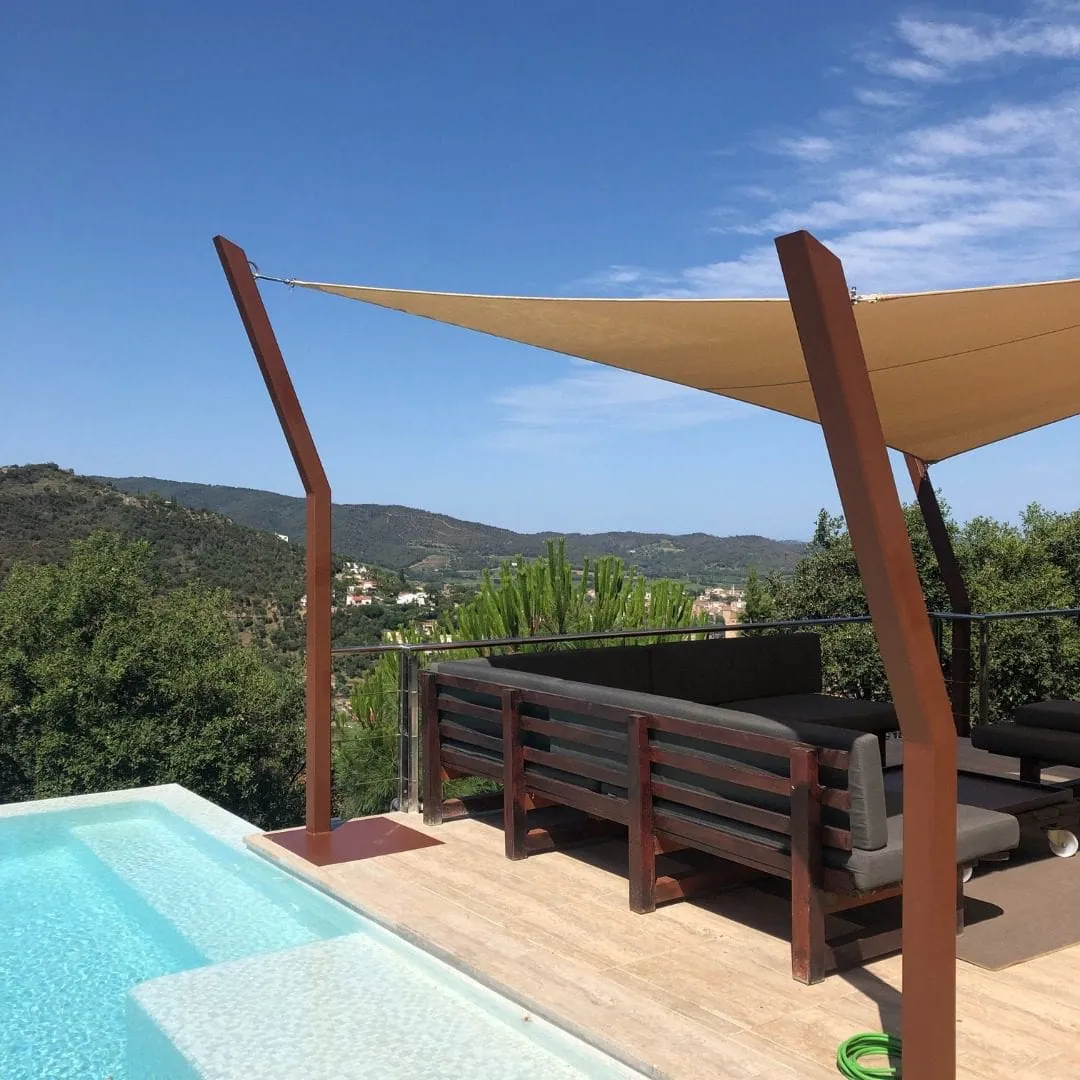 How to Install a Shade Sail: Complete GuideThese are the steps to install a shade sail correctly: Choose a suitable location to install your shade sail. Ensure that the location is safe and stable.…Read article
Shall we talk about your project?
Tell us what you want to cover and we will prepare a free, no-obligation quote.